Home / Blog / Telehealth Operations
Telehealth Operations
Telehealth Coordinator Jobs: Decode the Workflow Before You Apply
The title is broad, but the workflow is readable. Trace what the coordinator owns before, during, and after a virtual visit to see whether a role is mainly patient access, technical support, outreach, or program operations.
Start with the virtual-visit handoffs
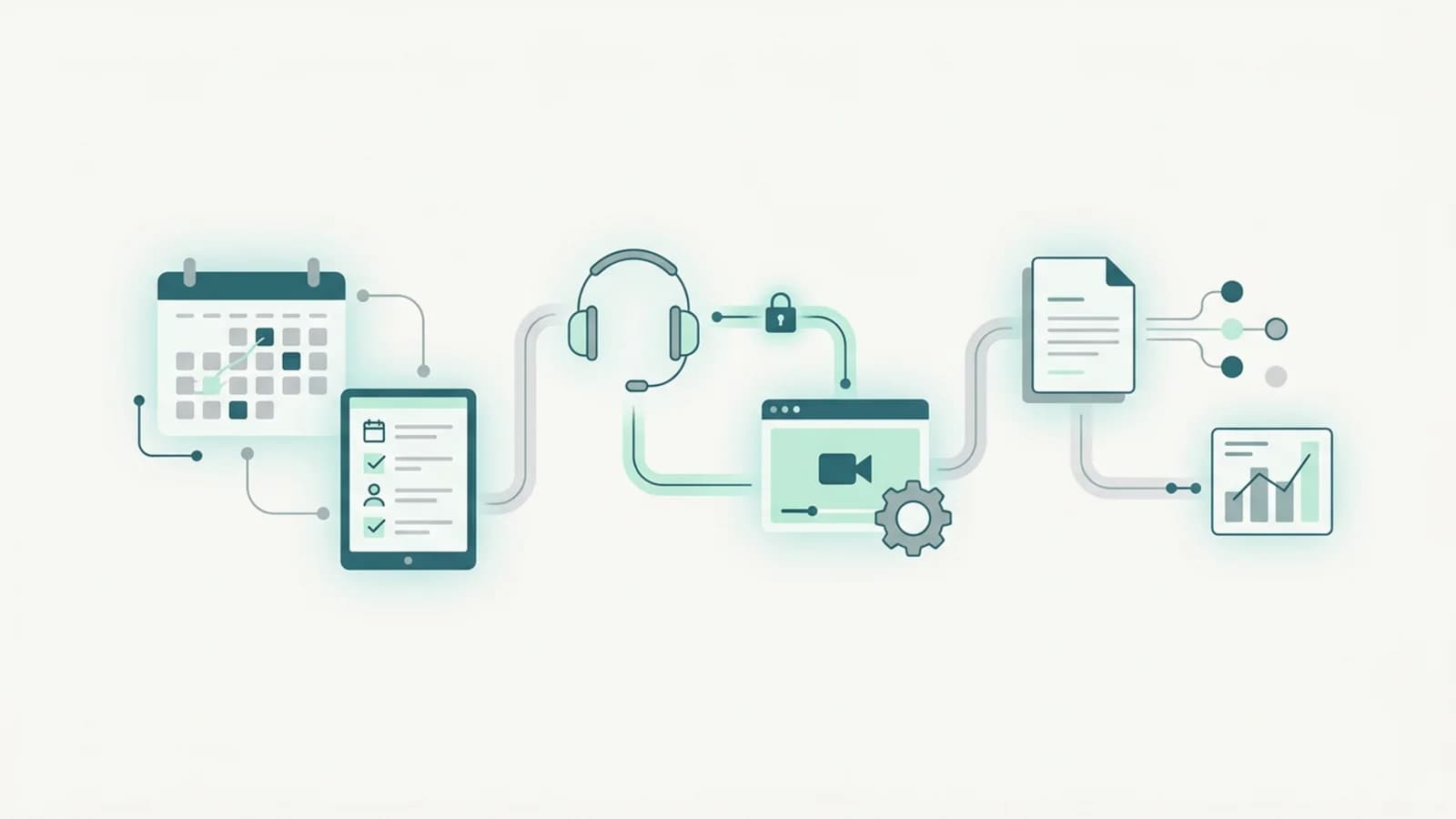
A telehealth coordinator usually keeps a virtual visit moving across several handoffs rather than delivering the clinical care. HHS identifies scheduling, check-in, consent, technology setup, documentation, billing, and follow-up as parts of the telehealth workflow. A posting may assign only two or three of those steps to the coordinator. Sketch the vacancy as before the visit, during the visit, and after the visit. That simple sequence exposes the real scope better than the title does.
Before the visit: access and readiness
Before a virtual appointment, coordinator work can include booking and rescheduling, registration, reminders, insurance or paperwork collection, instructions, and checking whether the patient can use the platform. HHS recommends planning how appointments are scheduled, how reminders are sent, what accommodations patients need, and who helps with technology. A current 10X Health scheduling vacancy concentrates on appointment queues, reminders, missed-visit recovery, documentation, and escalating attendance barriers. That is primarily a patient-operations role, even though it supports a telehealth platform.
During the visit: encounter and equipment support
Some roles move closer to the encounter. They may verify identity, complete intake steps, room a patient at an outreach site, connect equipment, resolve audio or video problems, or coordinate between a remote clinician and local staff. The University of Kansas Health System's current Telehealth Outreach Coordinator vacancy combines scheduling and registration with telehealth tablets, broadband connectivity, EHR workqueues, rooming, travel to rural clinics, and provider logistics. That is not a work-from-home scheduling job. Read location, travel, patient-contact, equipment, and licensure lines before assuming that “telehealth” means remote employment.
After the visit: close the loop
After-visit ownership may include routing messages, confirming follow-up appointments, maintaining records, monitoring unresolved requests, reporting on service activity, or helping an operations team understand no-shows and workflow failures. HHS includes documentation, telehealth-specific billing handling, and evaluation in the post-visit workflow, but employers divide those tasks differently. The Kansas outreach role includes grant reporting, while the 10X Health scheduling role tracks fill, no-show, reminder-response, and rescheduling measures. Reporting requirements therefore reveal whether the job ends with one appointment or supports a larger program.
Classify the posting by its dominant queue
Look for the queue or object that takes most of the day. Appointment requests, reminders, and cancellations indicate scheduling operations. Patient messages, intake, benefits questions, and referrals indicate access or care coordination. Devices, connectivity, platform setup, and clinic-room support indicate technical or encounter operations. Utilization reports, grants, vendor issues, workflow redesign, and service measures indicate program operations. Titles overlap, so classify the work before comparing your background. Medical front-office experience may transfer strongly to the first two lanes; equipment support, implementation, reporting, or project work may matter more in the latter two.
Test remote status and clinical boundaries separately
Do not use “telehealth,” “virtual care,” and “remote” as synonyms. Confirm the employee work location, required travel, supported patient states or clinics, fixed shift coverage, and whether equipment is handled on site. Then mark tasks that cross into clinical intake or require a license or certification. Requirements vary by setting: the Kansas opening prefers CNA or medical-assistant certification and requires travel, while the 10X scheduling opening focuses on healthcare coordination experience and systems use. Compare each requirement with evidence from your own work rather than assuming one credential fits the whole title family.
Build one handoff example for the interview
Prepare a non-confidential example of a delayed, missed, or complicated appointment. Explain the incoming request, the systems and records you checked, the people you coordinated, what you documented, when you escalated, and how you confirmed the next step. Remove patient and employer-confidential details. This demonstrates the central skill shared across the title's different lanes: keeping a patient-facing process moving without losing accuracy at the handoff. Review current healthcare administration jobs, compare broader options in the health information management career map, and use job alerts if you want to monitor changing telehealth and patient-operations titles.