Home / Blog / Revenue Cycle
Revenue Cycle
Healthcare Payment Posting Jobs: Trace the Reconciliation Path
Payment posting is a three-way control between money received, the payer's explanation, and the patient-account result. The exceptions show how much judgment a role actually owns.
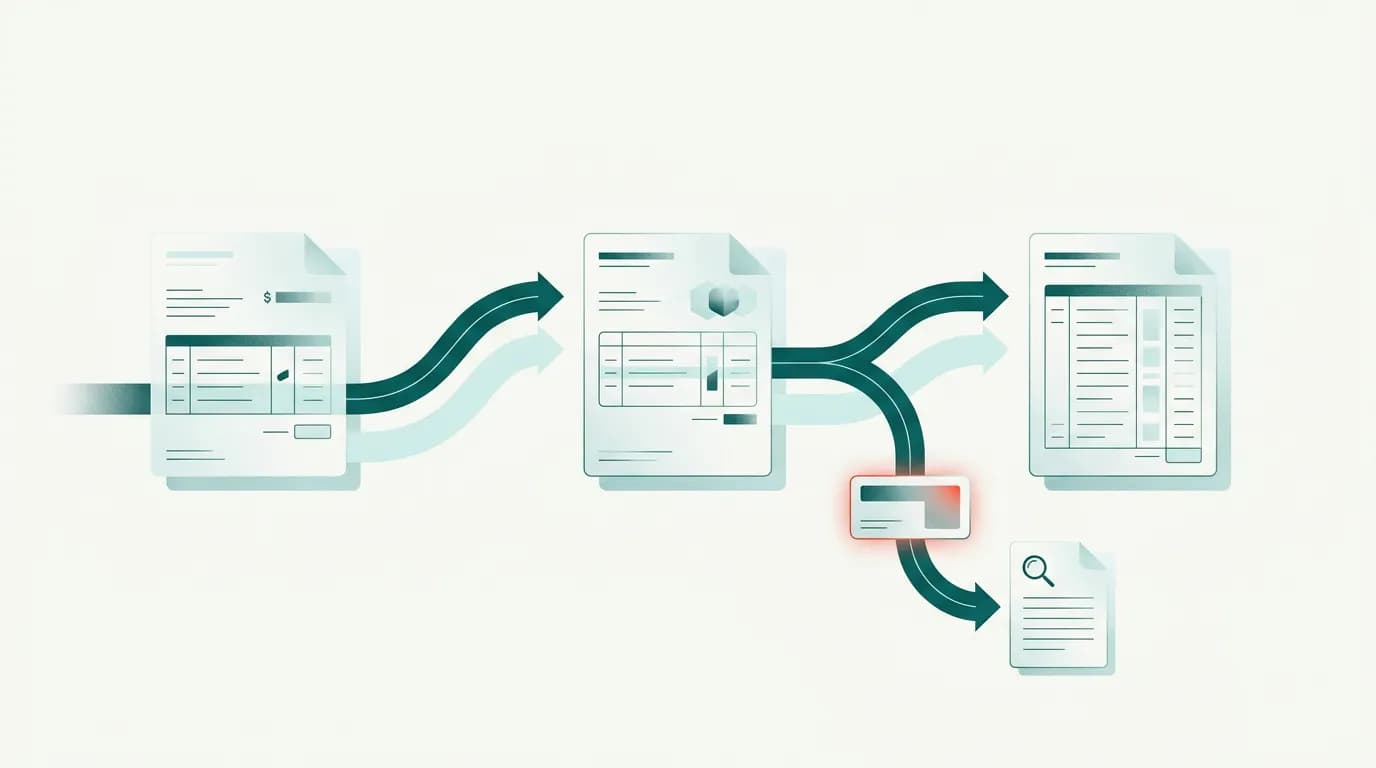
The job reconciles three records, not just one payment
A payment can reach the bank without landing correctly on a patient account, and a remittance can arrive without a matching deposit. Payment posting work connects three records: the funds received, the payer's remittance detail, and the transactions written to the billing system. CMS explains that an electronic funds transfer moves the money while an electronic remittance advice explains the claim payment and adjustments. The shared trace-number information helps the provider reassociate the EFT with the ERA. That is why accurate entry is only one part of the role; the batch must also balance across systems.
Follow the batch from receipt to a balanced account
A useful posting path has six checkpoints: identify the deposit, locate its remittance, verify the payer and total, apply payments and adjustments to the correct accounts, compare the posted batch with the deposit, and route any unresolved difference. Automated ERA posting can complete part of that path, but it does not eliminate exception work. ECU Health's current cash-application role explicitly reconciles daily deposits, EFTs, and lockbox payments with remittance advice or EOBs, then requires discrepancies to be identified and resolved. A posting that mentions only data entry describes a narrower job than one that owns balancing and investigation.
Exceptions reveal the real level of judgment
Read the vacancy for the exceptions it names. Unapplied or unidentified cash means funds are present but the correct account or remittance link is missing. A variance means the deposit, remittance, and posted total do not agree. A denial or zero-pay remittance carries account information without a normal payment. A takeback, recoupment, refund, or reversal changes an earlier transaction. Credit-balance work asks whether money should remain on an account, move elsewhere, or enter an approved refund process. Senior roles may also own aging, escalation, trend reporting, system testing, or workflow controls. UCLA Health's current cash-operations supervisor vacancy shows that progression through complex reconciliation, credit balances, unapplied cash, quality monitoring, and operational improvement.
Know where posting hands off to AR, denials, and finance
Payment posting records what the payer or patient paid and how the transaction affects the account. AR follow-up investigates why an expected payment has not arrived. Denials staff may research the clinical, coding, authorization, or payer-rule issue behind a non-payment. Finance may own bank and general-ledger controls. The boundaries vary: a posting specialist may identify an underpayment and route it, or may be expected to investigate it with the payer. Look for verbs such as post, balance, research, resolve, refund, escalate, and reconcile, then ask which team owns the next action when a batch does not close.
Use one reconciliation example to test your fit
Prepare a non-confidential example that shows the source records, the mismatch, the checks you performed, the correction or handoff, and the final control that proved the batch balanced. Be exact about authority: identifying a variance is different from approving an adjustment or refund. Compare the adjacent work in the medical billing AR follow-up guide, the denials management guide, and the revenue cycle career path. Then review current healthcare administration jobs and create job alerts for payment posting, cash application, remittance, and patient financial services titles.